September 9-11, 2026
Nazarbayev University, Astana

1st Conference and Workshop on Mathematics and Artificial Intelligence

Fostering interdisciplinary collaboration and innovation

00
Days
00
Hours
00
Minutes
00
Seconds
Back to conference home

Plenary Speakers

Meet the plenary speakers joining the conference from leading institutions across mathematics, optimization, machine learning, computer vision, and AI for health.

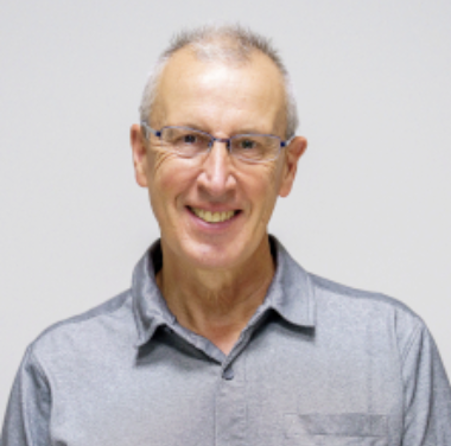
Image of Professor Enrique Zuazua 01

Professor Enrique Zuazua

University of the Basque Country & Université Pierre et Marie Curie

His research focuses in Applied Mathematics, with a particular emphasis on Partial Differential Equations, Control Theory, Numerical Analysis, and Machine Learning. His work has been recognized through distinctions including the Euskadi (Basque Country) Prize for Science and Technology (2006), the Julio Rey Pastor National Research Prize (2007), and the W.T. and Idalia Reid Prize of the Society for Industrial and Applied Mathematics (SIAM) (2022).

He has authored more than 430 publications and supervised over 32 doctoral theses. His research has been supported by three European Research Council Advanced Grants (NUMERIWAVES 2010, DyCon 2016, CoDeFeL 2024). He has also engaged in collaborative industrial and technology transfer projects in Spain and Germany. In addition to his editorial work with leading journals in Applied Mathematics, he actively contributes to the dissemination of science to broader audiences.
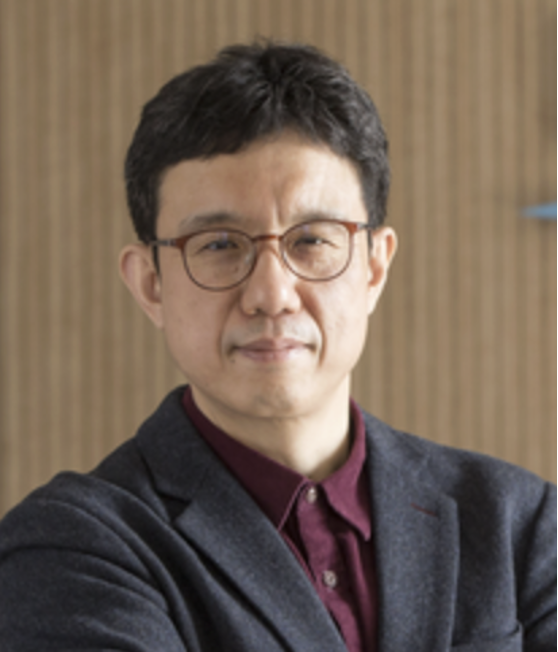
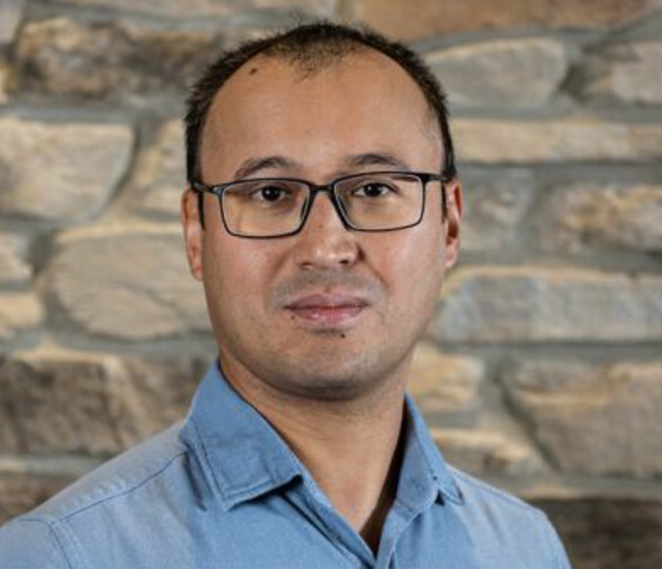
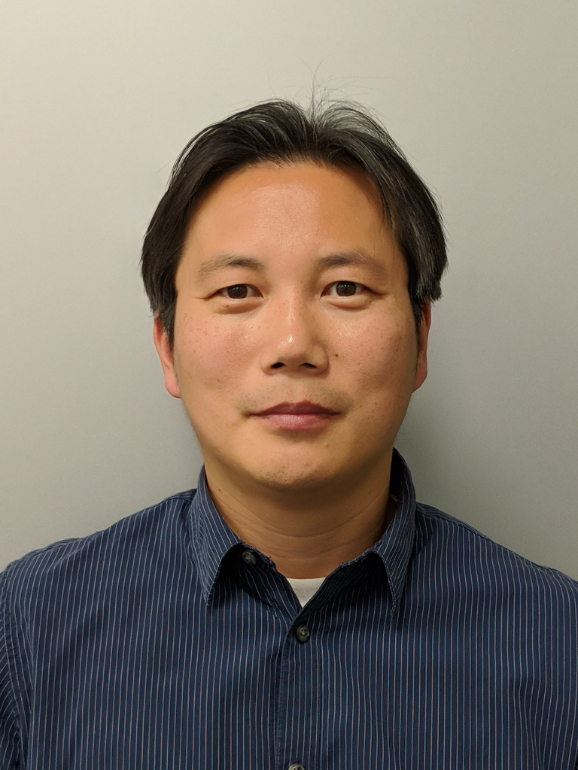
Image of Professor Jong Chul Ye 02

Professor Jong Chul Ye

Kim Jaechul Graduate School of AI, KAIST

Professor Jong Chul Ye is currently a Full Professor at the Kim Jaechul Graduate School of AI at KAIST (Korea Advanced Institute of Science and Technology), leading research in the convergence of medical imaging and artificial intelligence.

He received his B.S. and M.S. degrees in Control and Instrumentation Engineering from Seoul National University, and his Ph.D. in Electrical and Computer Engineering from Purdue University.

His research focuses on medical image reconstruction, deep learning-based image processing, and intelligent medical system development. As a Fellow of the IEEE, he actively contributes to the academic community and serves on the editorial boards of several international journals.

Through the fusion of AI and biomedical engineering, he aims to advance scientific innovation and contribute to the improvement of human health.

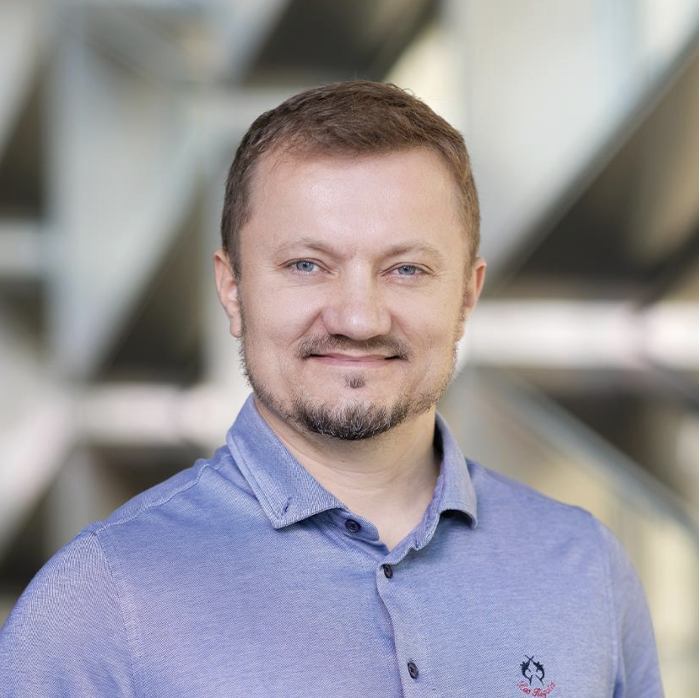
Image of Professor Zhenisbek Assylbekov 03

Professor Zhenisbek Assylbekov

Purdue University Fort Wayne

Zhenisbek Assylbekov is a researcher in machine learning and statistical learning theory. His work focuses on deep learning models, discriminant analysis, Gaussian mixture models, and the theoretical properties of optimization algorithms such as Expectation-Maximization (EM) and gradient descent.

His recent research includes developments in Deep Linear Discriminant Analysis and its variants, as well as theoretical guarantees for learning in overspecified Gaussian mixture models. He has also contributed to studies on classifier performance under long-tail data distributions and the limitations of gradient-based methods in learning high-frequency functions and modular arithmetic.

His publications appear in Q1 journals such as Statistical Papers and Machine Learning, as well as other peer-reviewed venues in machine learning and statistics.

Image of Professor Peter Richtárik 04

Professor Peter Richtárik

Professor of Computer Science, King Abdullah University of Science and Technology

Professor Peter Richtárik is a leading expert at the intersection of mathematics, optimization, and machine learning. He received his PhD in Operations Research from Cornell University and has held academic positions at University of Edinburgh before joining King Abdullah University of Science and Technology (KAUST) in 2017.

He is a founding Fellow of the Alan Turing Institute and has made significant contributions to randomized and distributed optimization algorithms. Professor Richtárik is also recognized as one of the original developers of Federated Learning, a key emerging area in artificial intelligence focused on training models across decentralized data sources while preserving privacy.

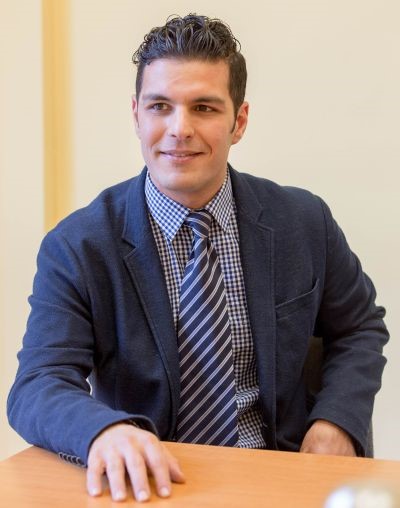
Image of Professor Bohyung Han 05

Professor Bohyung Han

Seoul National University

Bohyung Han is a Professor of Electrical and Computer Engineering at Seoul National University (SNU). Previously, he was an Associate Professor at POSTECH and a Visiting Research Scientist at Google DeepMind, Google Research, and Snap Research. He earned his Ph.D. from the University of Maryland, College Park, in 2005.

Professor Han has held major leadership roles in the computer vision and machine learning communities, including Program Chair for ICCV 2025 and BMVC 2026, and TPC Vice-Chair for ICASSP 2024. He regularly serves as Senior Area Chair for CVPR, NeurIPS, ICLR, and ICML, and is an Associate Editor for IEEE TPAMI.

His previous service includes General Chair for ACCV 2022, Demo Chair for ECCV 2022, Workshop Chair for CVPR 2021, and Tutorial Chair for ICCV 2019, as well as multiple Area Chair appointments at CVPR, ICCV, ECCV, NeurIPS, ICLR, AAAI, and IJCAI. His honors include being a Fellow of KAST (2025), receiving the NRF Scientist of the Month Award (2025), and the Google AI Focused Research Award (2018). Additionally, his research group won the Visual Object Tracking (VOT) Challenge in 2015 and 2016.