

The Institute of Smart Systems and Artificial Intelligence participated in the Erasmus+ Regional Infoday and Conference on Artificial Intelligence in Higher Education on 21–22 May 2026, which was organised by the National Erasmus+ Office in Kazakhstan and Seifullin University (Astana) with the support of the Ministry of Science and Higher Education of the Republic of Kazakhstan and the European Education and Culture Executive Agency (EACEA).
Other participants in the conference included representatives of ministries, rectors, vice-rectors, faculty members, administrative and managerial staff of universities, researchers, and members of the Higher Education Reform Experts (HERE) teams, as well as representatives of other Central Asian countries, including Uzbekistan, Kyrgyzstan, Turkmenistan, and Tajikistan.
The conference opened with speeches by Sayasat Nurbek, Minister of Science and Higher Education of the Republic of Kazakhstan, on the prospects for the development of AI and its implementation in higher education in Kazakhstan, and Madam Aleška Simkić, European Union Ambassador to Kazakhstan. The first day of the conference was dedicated to the Erasmus+ programme in the Central Asian region and the prospects for strengthening regional cooperation among universities in Central Asia, while the second day’s programme focused on the use of AI in higher education, AI workforce training in the context of contemporary challenges, and the ethical use of AI.
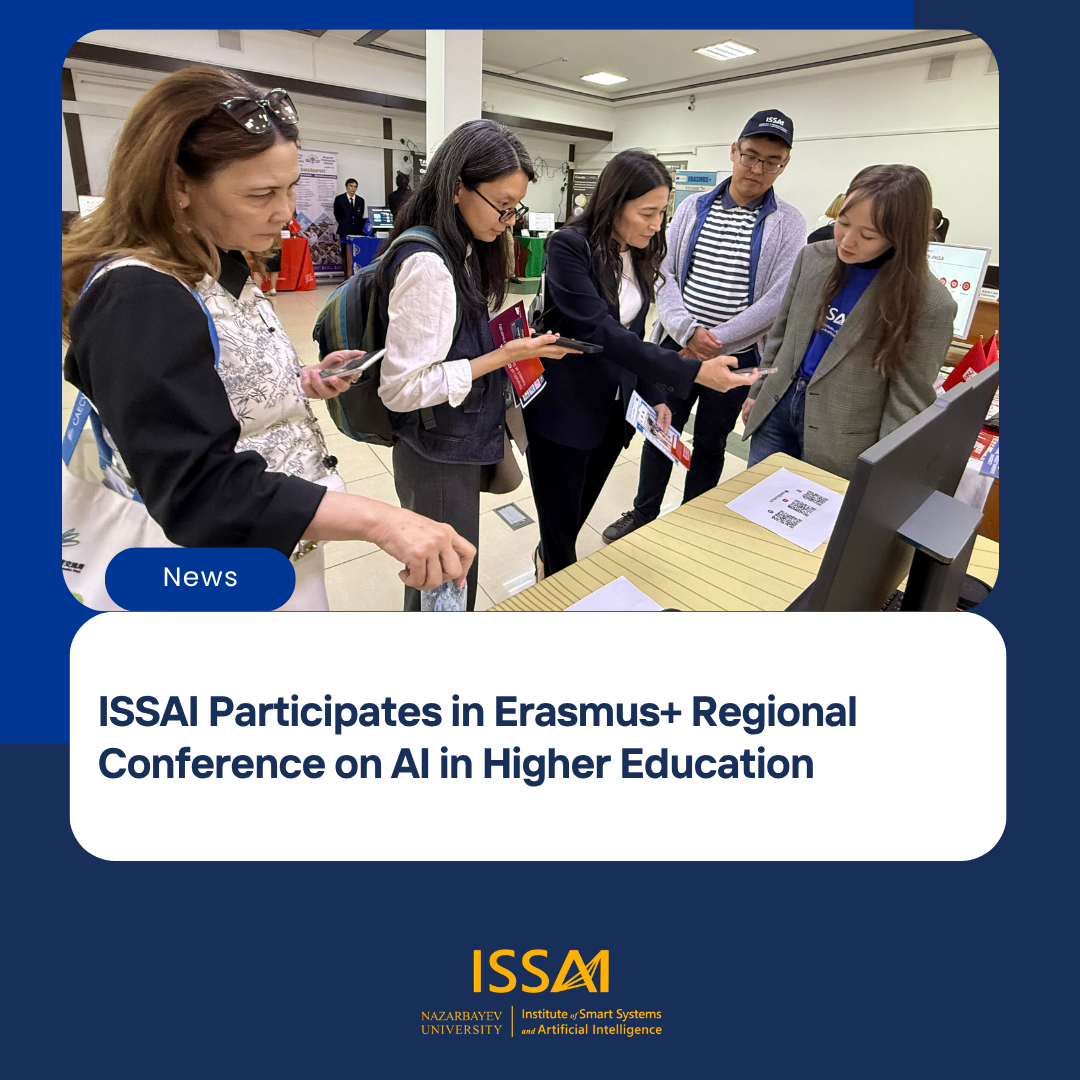
ISSAI participated in the Erasmus+ and AI Projects Exhibition alongside universities from different cities of Kazakhstan and branches of international universities. Members of the Institute, Yerbol Absalyamov, Executive Director; Aigerim Sarsenova, Senior External Affairs Manager; Ulzhan Alibek, External Affairs Manager; and Dimash Omarov, QA Tester, presented its products, research projects, educational initiatives, and the institute’s overall contribution to the country’s AI infrastructure. Participants in the exhibition showed great interest in ISSAI’s work, and the event helped establish grounds for potential collaborations with universities.
The conference served as a platform to foster dialogue among educational institutes of Central Asian countries, researchers, policymakers, and other stakeholders on the opportunities and risks of AI in higher education. It also aimed to develop recommendations and strategies for the responsible and ethical implementation of AI in higher education policy and practice while maintaining the values of the Bologna Process.